Is Ketamine Safe for Depression? Benefits, Risks & Myths

Medically reviewed by Dr. Sagar Mudgal
Psychiatrist
Arka Integrative Mental Health, Bangalore
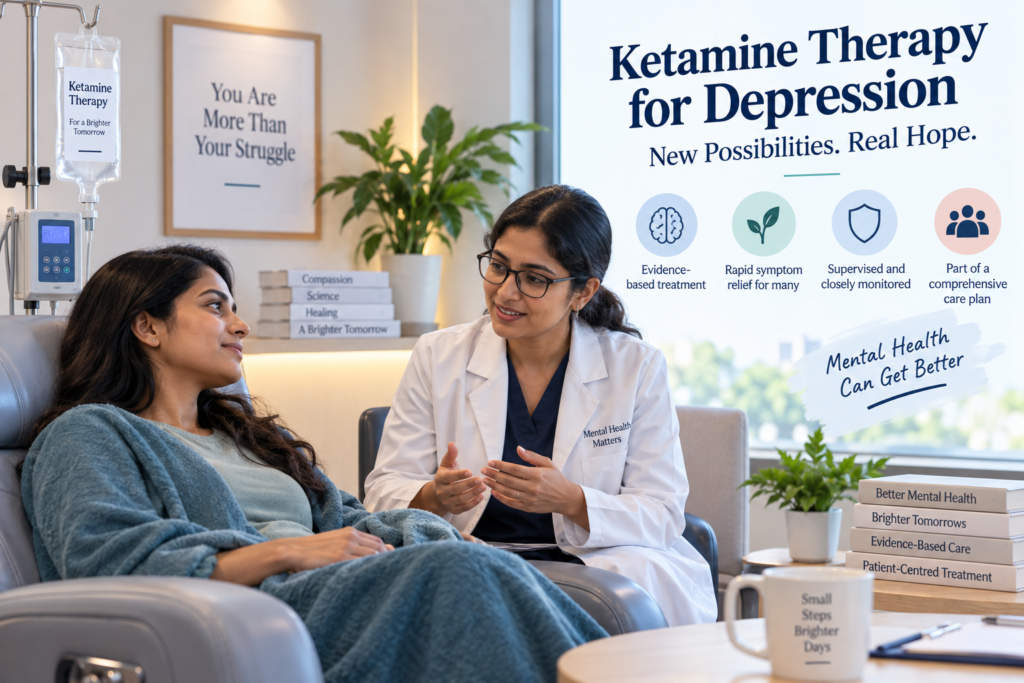
Ketamine kya hai? Ketamine is a medication developed in the 1960s as a surgical anaesthetic, and still used for that purpose worldwide, including in Indian operating rooms and emergency departments. At much lower doses than used for anaesthesia, and under direct medical supervision, it also has a well-documented, fast-acting antidepressant effect which is why psychiatric clinics use it for treatment-resistant depression. The short answer to whether it’s safe: in a licensed, supervised clinical setting, at the low doses used for depression, yes with a well-established short-term safety profile, real side effects that are actively monitored for, and a firm distinction from the unsupervised, often much higher-dose recreational use that gives the drug its more troubling reputation.
This guide separates what’s actually known about ketamine’s risks from what gets exaggerated or misunderstood and explains exactly why the clinical setting is what makes the difference.
Why Ketamine Is Used for Depression
Standard antidepressants (SSRIs, SNRIs) typically take 4–6 weeks to show their full effect, and roughly a third of people with depression don’t respond adequately to them even after trying more than one. Ketamine works through a different mechanism it triggers a rapid increase in glutamate signalling, which appears to prompt the brain to form new neural connections in circuits that become rigid during depression. The clinical result: some people experience meaningful relief within hours to days of a session, rather than weeks. This is specifically why it’s used for treatment-resistant depression cases that haven’t responded to at least two adequate trials of standard antidepressants rather than as a routine first-line treatment.
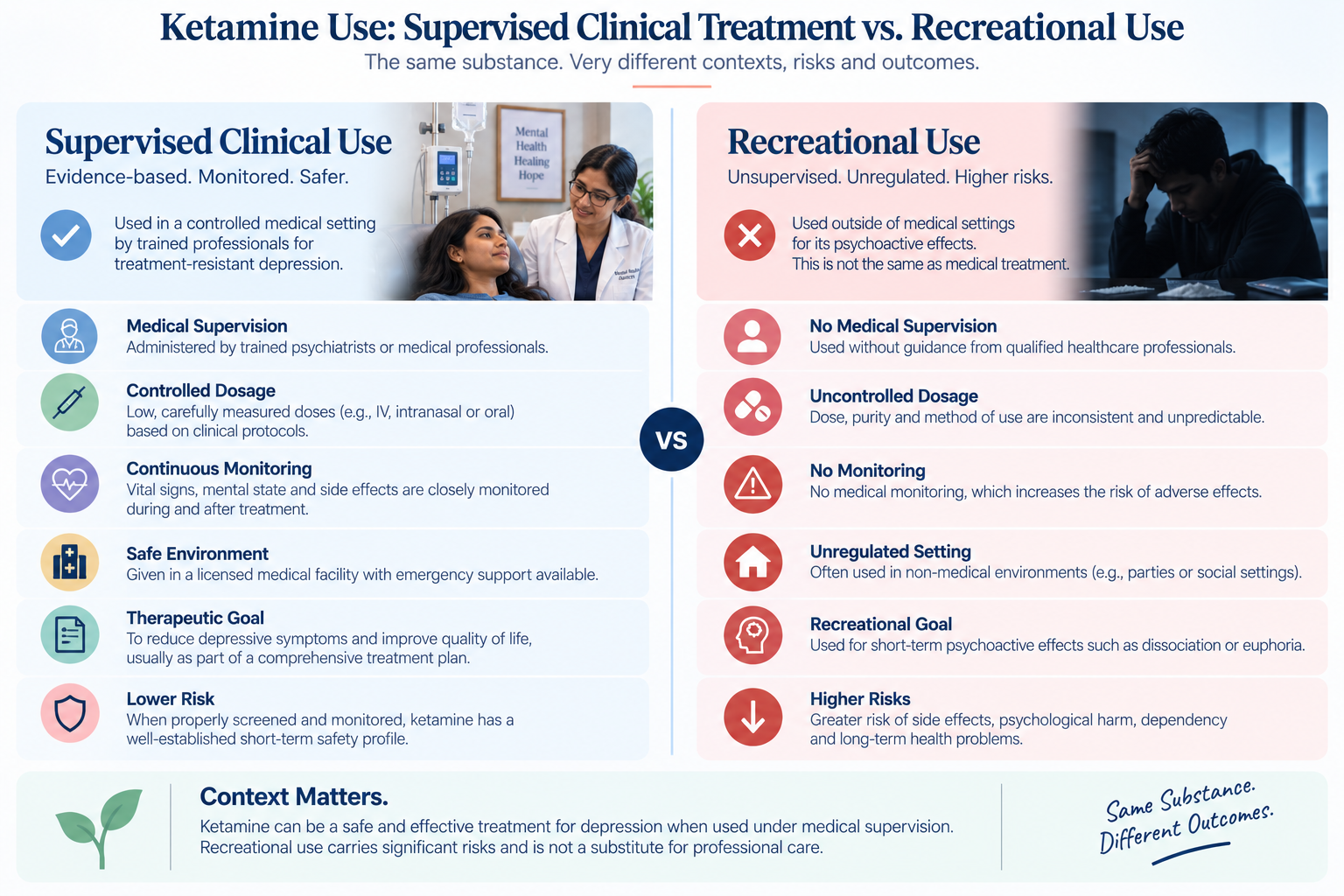
Supervised Clinical Use vs. Recreational Misuse: Why the Difference Matters
Supervised medical use | Recreational/unsupervised use | |
|---|---|---|
Dose | Low, precisely measured, weight- and condition-adjusted | Often much higher, unmeasured, inconsistent |
Setting | Licensed clinic, continuous monitoring | Unmonitored, unpredictable environment |
Frequency | A defined course (e.g. 4–8 sessions), then tapered/maintained under medical review | Often frequent, escalating, uncontrolled use |
Screening | Full psychiatric and cardiovascular screening beforehand | None |
Legal status in India | Legal Schedule X, psychotropic-scheduled medication administered by licensed clinicians | Illegal outside licensed medical use |
Nearly all of the serious harms associated with ketamine in media coverage and case reports bladder damage, cognitive impairment, dependence are linked to frequent, high-dose, unsupervised use over months or years, not to a short, medically supervised course of low-dose treatment for depression. That distinction doesn’t eliminate risk in the clinical setting, but it’s the difference the evidence actually points to.
Common Short-Term Effects, and How They’re Managed
During a supervised session, it’s common and expected to experience some of the following, which typically resolve within the session or shortly after:
- Dissociation a sense of detachment from your body or surroundings, which is part of the drug’s mechanism and is monitored throughout the session, not a sign something has gone wrong.
- Mild rise in blood pressure and heart rate why vital signs are checked before, during, and after every session, and why people with uncontrolled hypertension or significant cardiac history are screened out beforehand.
- Nausea or lightheadedness manageable and usually brief.
- Drowsiness afterward this is why you’re monitored for a recovery period at the clinic and shouldn’t drive yourself home after a session.
These effects are the reason ketamine therapy is administered only in a monitored clinical setting not because the medication is unusually dangerous when used this way, but because active monitoring is what keeps known, manageable effects from becoming anything more.
Reducing the Fear Response
Promoting Emotional Healing
As the fear response becomes less intense, people with anxiety or PTSD can find significant relief from their symptoms. Psilocybin allows them to approach and work through tough emotions and memories, leading to emotional healing. This can help reduce anxiety and PTSD symptoms over time, as people learn to manage their feelings in a healthier way.
Calming the Brain’s Fear Center
Psilocybin helps to quiet the overactive amygdala, which calms the brain’s fear response. This makes it easier for people to face and think about their fears and traumatic memories in a way that feels safer and less scary. By reducing the fear response, individuals can start to heal emotionally.
Addiction and Overdose:What the Evidence Actually Shows
Can ketamine therapy cause addiction? Ketamine does have dependence potential with frequent, high-dose, unsupervised use this is well established and is exactly why it’s a controlled psychotropic substance in India, not an over-the-counter or take-home medication. In a supervised clinical protocol infrequent, low, medically dosed sessions with built-in screening for personal or family history of substance use disorder the dependence risk described in recreational-use literature does not directly apply the same way, which is one reason legitimate clinics screen for a substance use history before treatment and don’t provide take-home doses.
Ketamine overdose meaning: in a clinical context, an “overdose” concern generally refers to exceeding the safe, monitored dose range for the setting (anaesthesia doses are far higher than the doses used for depression) which is precisely what continuous monitoring, weight-based dosing, and a licensed clinician’s oversight are designed to prevent. This risk is categorically different from, and far better controlled than, unmeasured recreational use.
Who Should Not have Ketamine Therapy
A thorough intake screening exists specifically to rule ketamine out for people with:
- Uncontrolled high blood pressure or significant cardiovascular disease
- A personal or strong family history of psychosis or schizophrenia (ketamine can transiently worsen psychotic symptoms)
- An active substance use disorder, particularly involving ketamine or other dissociatives
- Pregnancy, unless specifically cleared by both psychiatric and obstetric care
- Significant untreated liver or bladder disease, given links between very heavy long-term use and bladder dysfunction
If any of these apply to you, a responsible clinic will discuss alternative options such as TMS or adjusted medication strategies rather than proceeding with ketamine regardless.

Myths vs. Evidence
Myth: “Ketamine therapy is basically the same as taking a party drug.” Evidence: the dose, frequency, setting, and medical screening involved in supervised depression treatment are entirely different from unsupervised recreational use, and this is the single biggest factor separating the risk profiles of the two.
Myth: “It’s a miracle cure with no downsides.” Evidence: it isn’t. It has real, monitored short-term side effects, isn’t appropriate for everyone, and its antidepressant effect from a single session typically fades over days to weeks without a structured course and follow-through including therapy in a ketamine-assisted psychotherapy model.
Myth: “Any clinic offering ketamine is safe because it’s legal.” Evidence: legal status means a clinic is permitted to offer it under license it doesn’t guarantee the quality of screening, monitoring, or clinical judgment behind how it’s used. Ask specifically whether a psychiatrist, not only an anaesthetist, is directing your treatment plan.
What About Esketamine (Spravato)?
You may also come across esketamine, sold as a nasal spray under the brand Spravato a related but distinct molecule (one specific mirror-image component of ketamine) that has received formal regulatory approval in several countries specifically for treatment-resistant depression, administered under supervision in a certified setting. Generic ketamine, given as an IV infusion or injection, is used off-label for depression meaning it’s a legally prescribed medication used for a purpose beyond its original anaesthetic approval, a common and legal practice in psychiatry, but worth understanding when comparing options and costs between what different clinics offer.
How to Start Safely
If treatment-resistant depression has brought you to this question, the safest next step is a full psychiatric evaluation not a booking for an infusion. That evaluation is what determines whether ketamine therapy is appropriate for you, screens for the contraindications above, and lays out what a supervised course would actually involve. For the fuller picture of how the process, timeline, and cost work in India, see our companion guide: Ketamine Therapy in India: Cost, Procedure & What to Expect. Book a consultation with Arka Integrative Mental Health in Bangalore to have this evaluated properly.
Frequently Asked Questions
In a licensed, supervised clinical setting, at the low doses used for depression, yes — with a well-established short-term safety profile that’s actively managed through continuous monitoring and pre-treatment screening. It isn’t appropriate for everyone, which is exactly why that screening happens before any dose is given.
The most common short-term effects are dissociation, a mild rise in blood pressure and heart rate, nausea, lightheadedness, and drowsiness afterward — all monitored for and managed during a supervised session, and typically resolving within the session or shortly after.
Ketamine does carry dependence potential with frequent, high-dose, unsupervised use, which is why it’s a controlled substance in India. Supervised clinical protocols use infrequent, low, medically dosed sessions with screening for substance use history specifically to manage this risk — it is not equivalent to the risk profile of recreational use.
It triggers a rapid increase in glutamate activity in the brain, which appears to support the formation of new neural connections in circuits that become rigid during depression — producing an antidepressant effect that can appear within hours to days, faster than standard antidepressants.
Yes, substantially — in dose (much lower and precisely measured), setting (a monitored clinical environment), frequency (a defined, medically managed course), and legal status (administered only by licensed clinicians under India’s psychotropic substance regulations). Most of the serious harms linked to ketamine in the media relate to frequent, high-dose, unsupervised use, not short, low-dose, supervised treatment.
People with uncontrolled high blood pressure or significant heart disease, a personal or strong family history of psychosis, an active substance use disorder, or who are pregnant (without specific obstetric clearance) are generally not candidates. A full screening before treatment is designed to catch this.
You Don’t Have to Navigate This Alone
If you’re exploring treatment options for mental health, trauma, or emotional wellbeing, our clinical team can help you understand what may be appropriate for your needs.
Talk to Our Clinical TeamCommunity and Resources
Online Communities and Support
If you’re curious about microdosing or want to learn more, there are plenty of online places where you can connect with others:

Reddit Communities
r/microdosing – A popular Reddit community where people share their experiences, ask questions, and discuss microdosing and psychedelic therapy.

Online Forums
The Third Wave – A website with forums and resources about psychedelics and microdosing.
Local Support Groups
Check sites like Meetup or search on social media to find local groups that focus on microdosing and psychedelics.
Books, Podcasts,and Courses
Here are some easy-to-understand resources if you want to learn more about microdosing:

Books
- “The Psychedelic Explorer’s Guide” by James Fadiman – A key book on psychedelics, including tips on microdosing.
- “How to Change Your Mind” by Michael Pollan – Explores the history and science of psychedelics, with insights into microdosing.
Podcasts
- “The Psychedelic Podcast” – Interviews with experts about psychedelics and mental health.
- “Microdosing Psychedelics” – A podcast focused on the practice and benefits of microdosing.

Courses
- Coursera – Search for courses on psychedelics and mental health, including microdosing.
- Udemy – Offers courses on microdosing and psychedelic therapy.
- MAPS (Multidisciplinary Association for Psychedelic Studies) – Provides educational resources and courses on psychedelic research and therapy.
These resources can help you learn more about microdosing and connect with others who share your interest.